Langtang Valley Trek Nepal
A personally led, nine-day small-group trek through Langtang National Park.
Mountains, Culture & Nature in Nepal
Join our unique Langtang trail experience this Autumn | FLEXIBLE DATES
This trek is rooted in my Great Himalayan Trail journey, and takes you through Langtang Valley, a region I return to for its exceptional landscapes, long-standing friendships, rich mountain ecosystems, and the visible vulnerability of its glaciers. It’s also home to the best high-altitude bakery I’ve ever found.
More than guiding on lesser-known trails, this is about moving through mountain environments with attention, and sharing what I’ve learned from crossing the Himalayas and climbing the highest peaks in a way that stays grounded and accessible.
Designed for a small group who care about nature and adventure, at a reasonable pace.
Fastpacking or trail-running sections are possible if the group is keen.
Above all, this is about taking time to understand a valley and its communities, not just passing through.
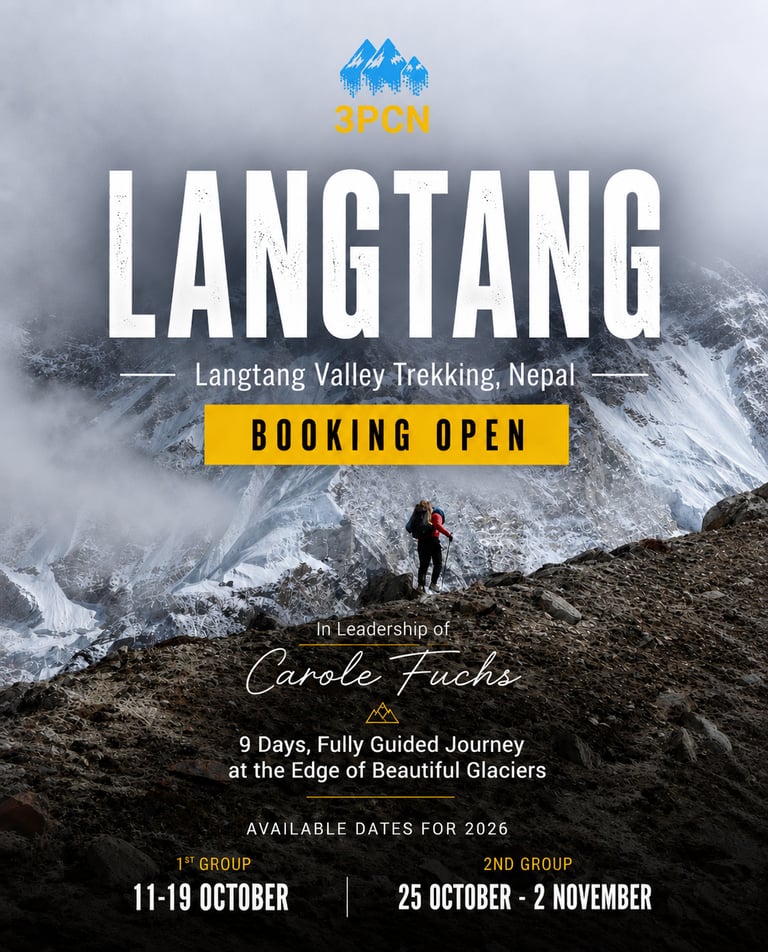
Duration: 9 days

Why choose this Langtang Valley Trek?
I first spent nine days in Langtang while crossing Nepal on the Great Himalaya Trail and filming my documentary, Beyond Records. During that time, I interviewed local people, explored the valley and began to understand Langtang not simply as a trekking destination, but as a place shaped by deep community ties, environmental change and recovery.
I have kept returning ever since. Over time, I have built friendships and local connections that allow me to lead this journey with a familiarity that goes beyond the standard trekking route.
I will personally lead the group, drawing on my experience as a mountaineer, anthropologist and climate change expert. Along the way, I will share what I have learned about Langtang’s communities, glaciers and changing mountain environment, while leaving space for the journey itself: walking, observing and spending time with the people who live there.
With a small group and a carefully paced itinerary, this trek is designed for curious travellers who want to experience Langtang with greater depth and understanding.
Our Beyond Records Mountain Learning Programme
Integrated throughout the trek, our Learning Programme offers a deeper understanding of the Himalayas through observation, discussion, and shared experience.
The programme includes:
Glacier Observation Sessions
Mountain Ecosystem Interpretation
Climate & Water Conversations
Mountain Story Evenings
Beyond Records Documentary Insights
The programme is designed to be accessible, engaging, and rooted in the landscape itself. There are no lectures or classrooms, learning happens through experience, observation, conversation, and immersion in the mountains.
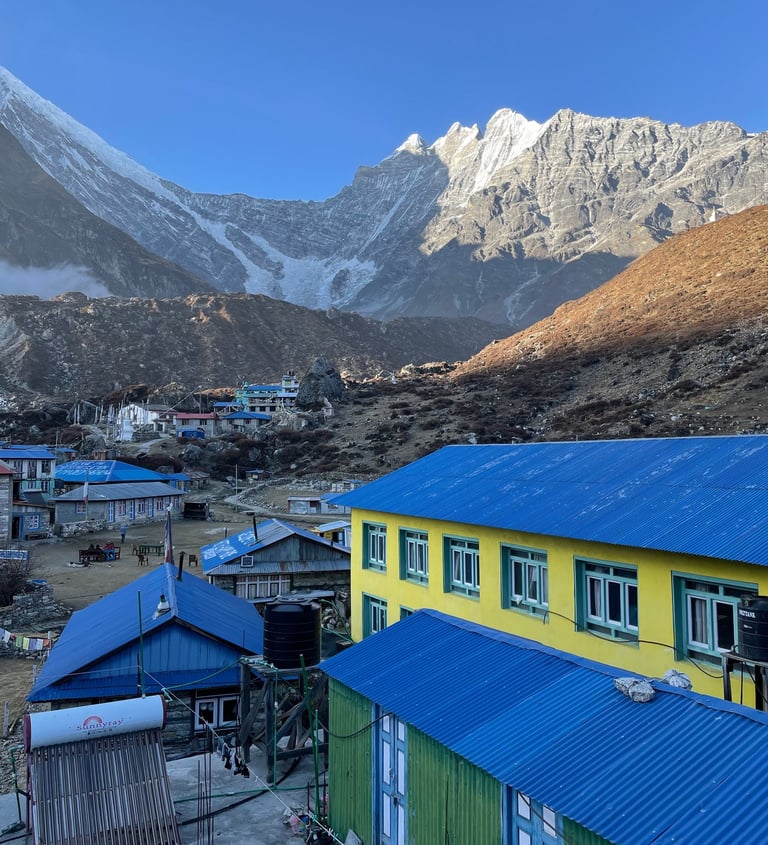
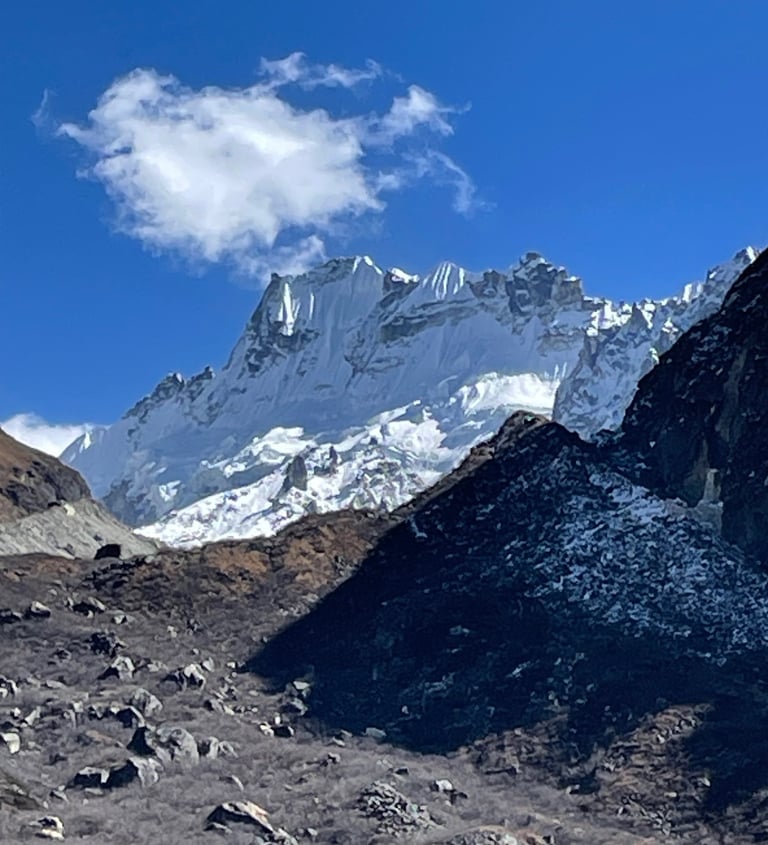

Langtang Valley Trek highlights
Langtang Valley Trek difficulty and fitness level
The Langtang Valley Trek is a moderately challenging Himalayan trek. It does not involve technical climbing, but you should be comfortable walking for several hours on consecutive days over uneven mountain trails, including sustained ascents and descents.
You do not need previous high-altitude trekking experience, although a good level of general fitness and regular walking experience will make the journey more enjoyable. The trek is suitable for active travellers who can maintain a steady pace over several days.
Altitude is an important part of the Langtang trek. As we move higher through the valley towards Kyanjin Gompa, the itinerary allows time for gradual acclimatisation and rest. I will personally lead the group and monitor how everyone is responding to the altitude, working alongside our experienced local trekking team.
In the weeks before departure, I recommend regular hill walking, stair climbing or hiking with a light daypack. Strengthening your legs and improving your general endurance will help you feel more confident on the trail.
Langtang Valley Trek price
The price will depend on the final group size, as some costs are shared between participants. Please send me a message using the form below for the latest price and availability.
Langtang Valley Trek Itinerary
Day 1: Arrival Kathmandu (1,324m) | Briefing
Private transfer to the hotel. Afternoon briefing with Carole introducing the journey: Himalayan climate systems, glacier retreat, acclimatisation, and how to read mountain landscapes. Welcome dinner.
Day 2: Into Langtang National park
Kathmandu (1324m) → Syabrubesi (1,503m) → Bamboo Lodge (1,970m)
Distance: ~7 km
Elevation Gain: ~600m
Drive to Syabrubesi and begin the journey along the Langtang River through forested valleys and traditional lodges.
Day 3: Langtang Village | Memory, Recovery & Mountain Communities
Bamboo Lodge (1,970m) → Langtang Village (3,430m)
Distance: ~15 km
Elevation Gain: ~1,500m
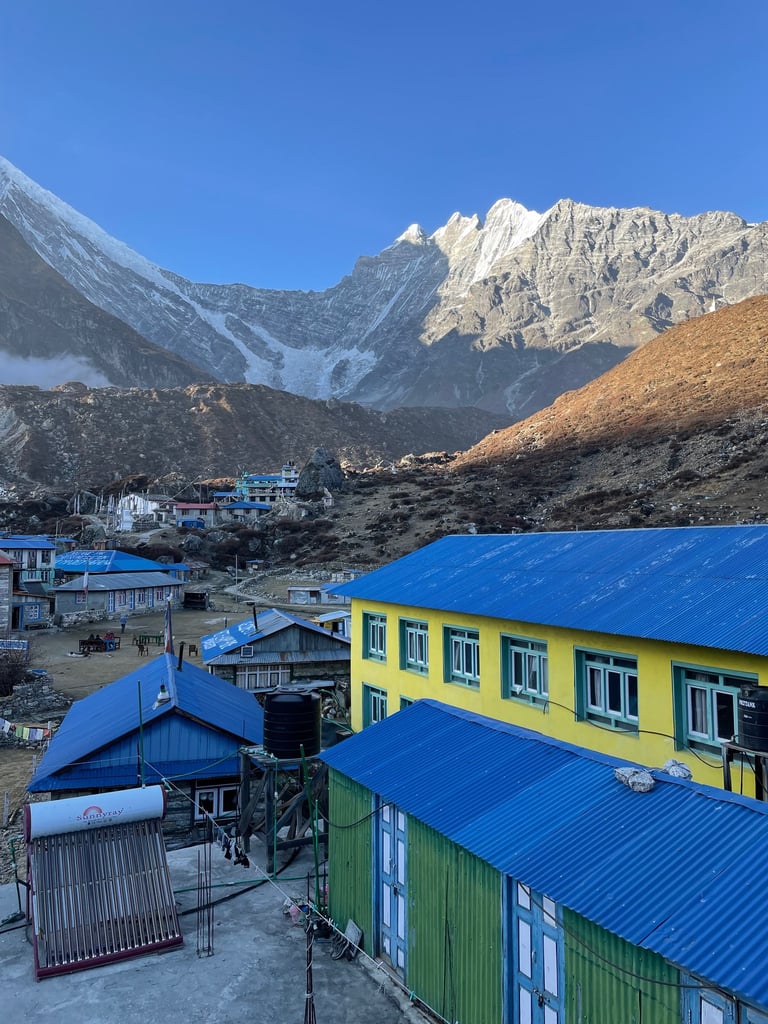
Ascend through changing vegetation zones into the upper valley and reach Langtang Village, rebuilt after the 2015 earthquake.
Day 4: Kyanjin Gompa | Monastery, Culture & Glacial Landscapes
Langtang Village (3,430m)→ Kyanjin Gompa (3,850m)
Distance: ~6 km (+400m)
Elevation Gain: ~400m
A shorter acclimatisation day to Kyanjin Gompa, with time to visit the monastery and surrounding viewpoints. Climate change workshop in the evening.
Day 5: Tserko Ri | High-Altitude Viewpoint
Kyanjin Gompa (3,860) → Tserko Ri (4,985m)
Distance: 12 km
Elevation Gain: ~1100m
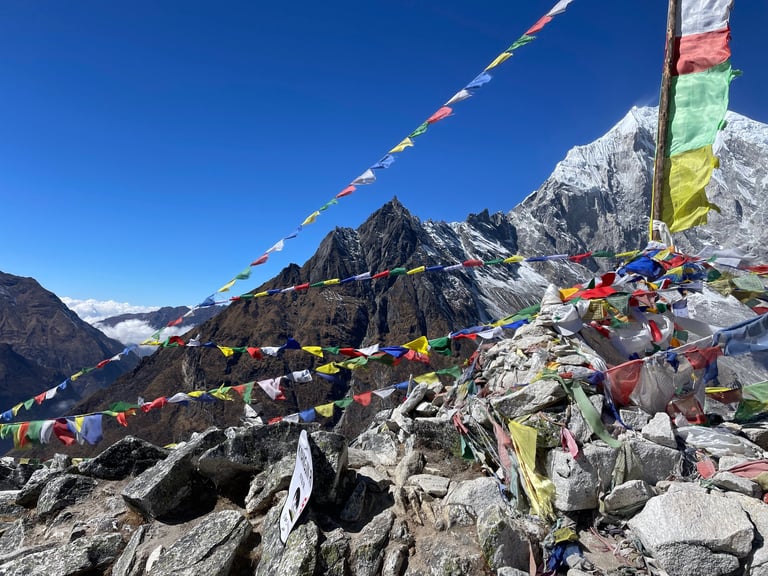
Ascent of Tserko Ri for panoramic views of Langtang Lirung, Yala Glacier and the surrounding peaks.
Day 6: Glacier Moraine Walk | Climate Field Session
Kyanjin Gompa (3,860m) → Glacier hike (4,500m) (check glaciers from the moraine)
Distance: ~12 km
Elevation Gain: ~700m
Walk across high rangelands and moraine terrain to observe the glacier from a safe distance.
Day 7: Descent to Bamboo | Forests & Transitions
Kyanjin Gompa (3,860m) → Bamboo Lodge (1,970m)
Distance: ~21 km
Descente: ~1900m
Descend through alpine and forest zones toward Bamboo Lodge.
Day 8: Return to Kathmandu | Debrief Dinner
Bamboo Lodge (1,970M) → Syabrubesi (1,503m) → Kathmandu (1,324m)
Walk to Syabrubesi and return by road to Kathmandu. Evening debrief and closing dinner.
Day 9: Kathmandu Buffer Day / Departure
Recommended buffer day for weather, road conditions and international travel. Optional cultural visits.
Frequently asked questions
Is the Langtang Valley Trek suitable for beginners?
Yes, the Langtang Valley Trek can be suitable for fit and well-prepared beginners. You should be comfortable spending full days outdoors and willing to train beforehand, but no mountaineering or technical climbing skills are required.
When is the best time to trek in Langtang?
The best time to trek in Langtang is during spring, from March to May, and autumn, from October to November. These seasons generally offer the most favourable conditions for walking in the Langtang Valley.
Spring brings warmer days and flowering rhododendrons across the lower forested sections of Langtang National Park. Autumn follows the summer monsoon and is known for clearer skies and excellent views of the surrounding Himalayan peaks.
This journey takes place in autumn, when the landscape is usually at its clearest and the trails are well suited to trekking. Conditions in the mountains can still change quickly, however, and mornings and evenings become cold as we gain altitude towards Kyanjin Gompa.
Langtang can also be visited outside the main trekking seasons, but winter may bring snow and very cold conditions at higher elevations, while the summer monsoon usually brings rain, cloud and wetter trails.
What is not included?
The journey has been designed so that most essential costs are included, allowing you to concentrate on the experience rather than managing daily payments. Any occasional personal expenses are explained clearly below.
International flights to and from Nepal
Nepal entry visa and passport-related costs
Personal travel insurance
Emergency medical treatment, helicopter evacuation or repatriation
Meals and drinks in Kathmandu unless specifically listed
Alcoholic drinks, bottled drinks, speciality coffees and personal snacks
Hot showers, Wi-Fi and device charging where lodges charge separately
Personal trekking clothing and equipment
Vaccinations, medication and personal medical expenses
Tips for Nepali guides, porters, drivers and lodge staff
Single-room supplements, where requested or available
Excess baggage or porter weight above the stated allowance
Laundry, souvenirs and other personal expenses
Optional activities or excursions not included in the itinerary
Additional accommodation, transport or other costs caused by weather, road conditions, illness, delayed flights or changes outside our control
For insurance: Guests must have travel insurance covering high-altitude trekking at the maximum altitude reached on the itinerary, emergency medical treatment, helicopter evacuation and repatriation.
What accommodation is available during the trek?
We will stay in comfortable mountain lodges along the route. Rooms are simple but welcoming, usually with twin beds, blankets and shared bathroom facilities.
Some lodges offer hot showers, charging points and internet access, although availability can vary with location, weather and power supply. As we move higher into the valley, facilities become more basic, but the lodges remain warm, sociable places to rest after a day on the trail.
Food is a real highlight of the journey. The lodges serve a wide range of freshly prepared meals, including traditional Nepali dishes, Tibetan-influenced food and familiar international options. Vegetarian meals are widely available, and dietary requirements can usually be accommodated with advance notice.
What is included in the trek price?
The price covers the principal costs of the journey from arrival in Kathmandu until the end of the programme, including:
Accommodation in Kathmandu for the nights specified in the itinerary
Comfortable mountain-lodge accommodation during the trek
Breakfast, lunch and dinner while trekking
Ground transport between Kathmandu and the Langtang trailhead
Langtang National Park entry fees and required trekking permits
Personal leadership by Carole Fuchs
An experienced, licensed Nepali trekking guide and local support team
Porters, including a stated baggage allowance per guest
Pre-departure information, preparation guidance and a group briefing in Kathmandu
Group first-aid equipment and emergency coordination
Local taxes and service charges
Any activities or community visits specifically listed in the itinerary
Langtang Valley Trek Gallery
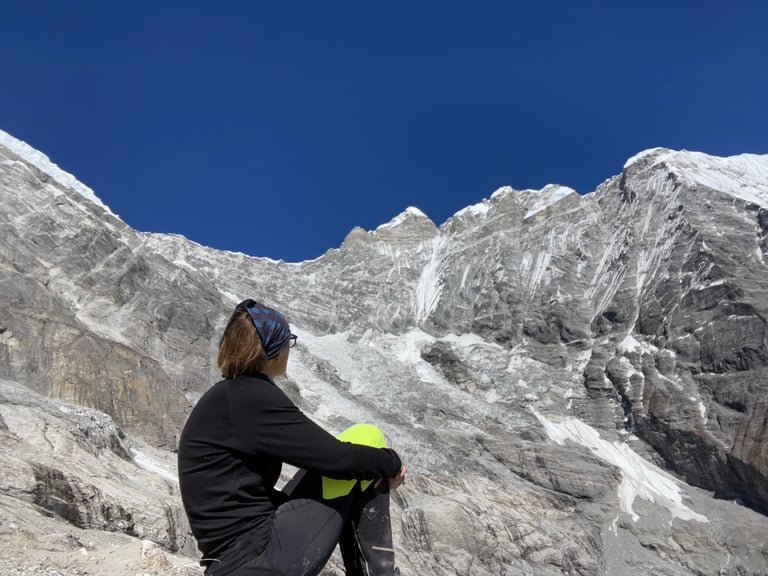
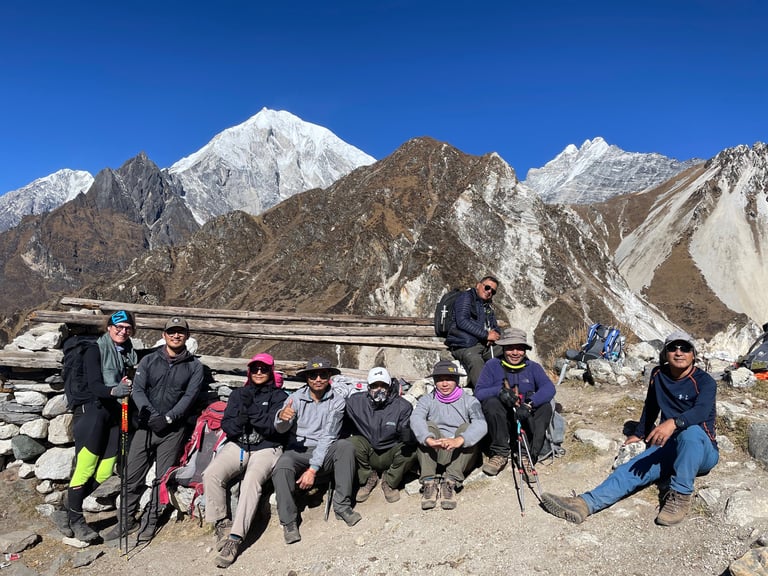
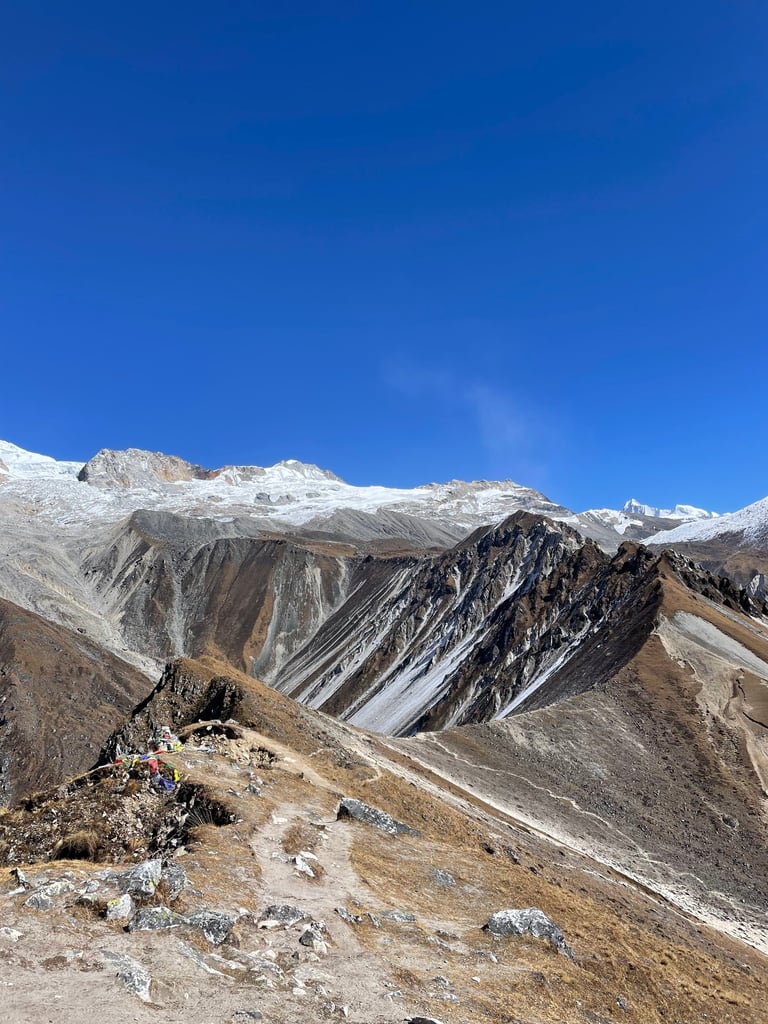
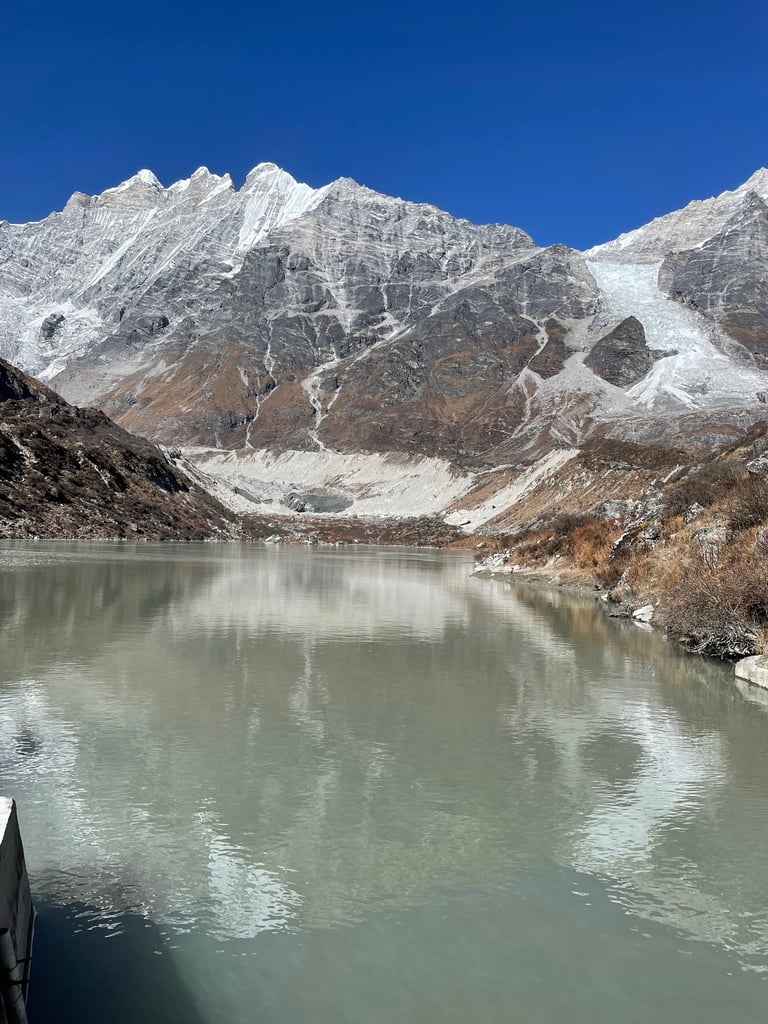
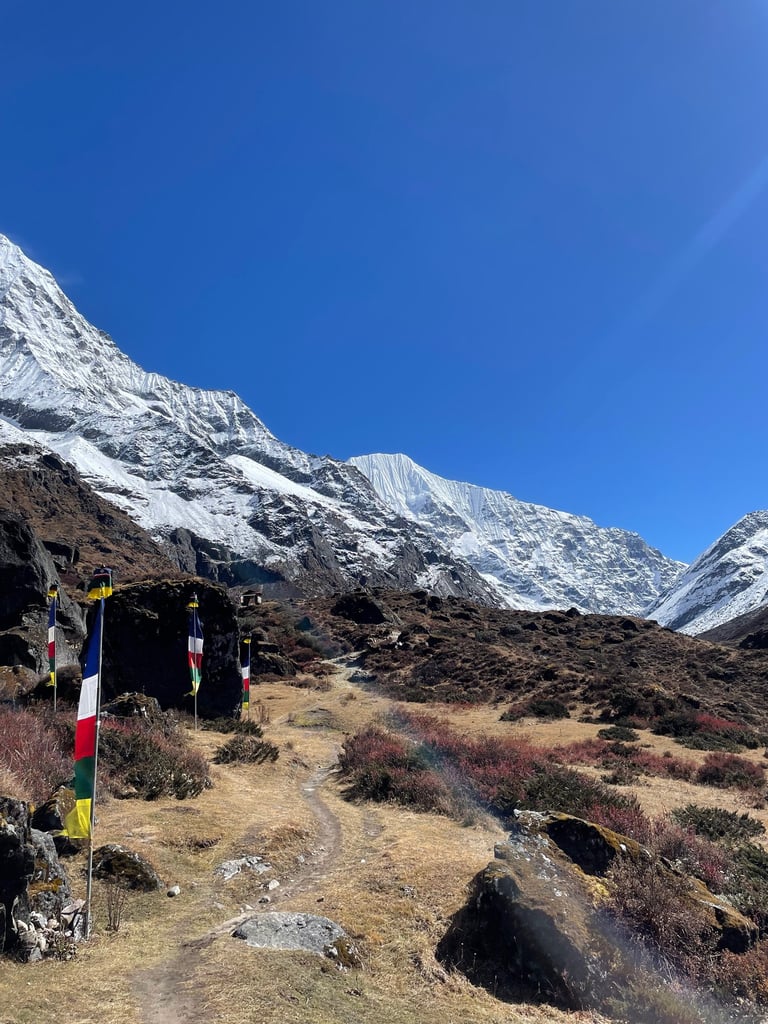
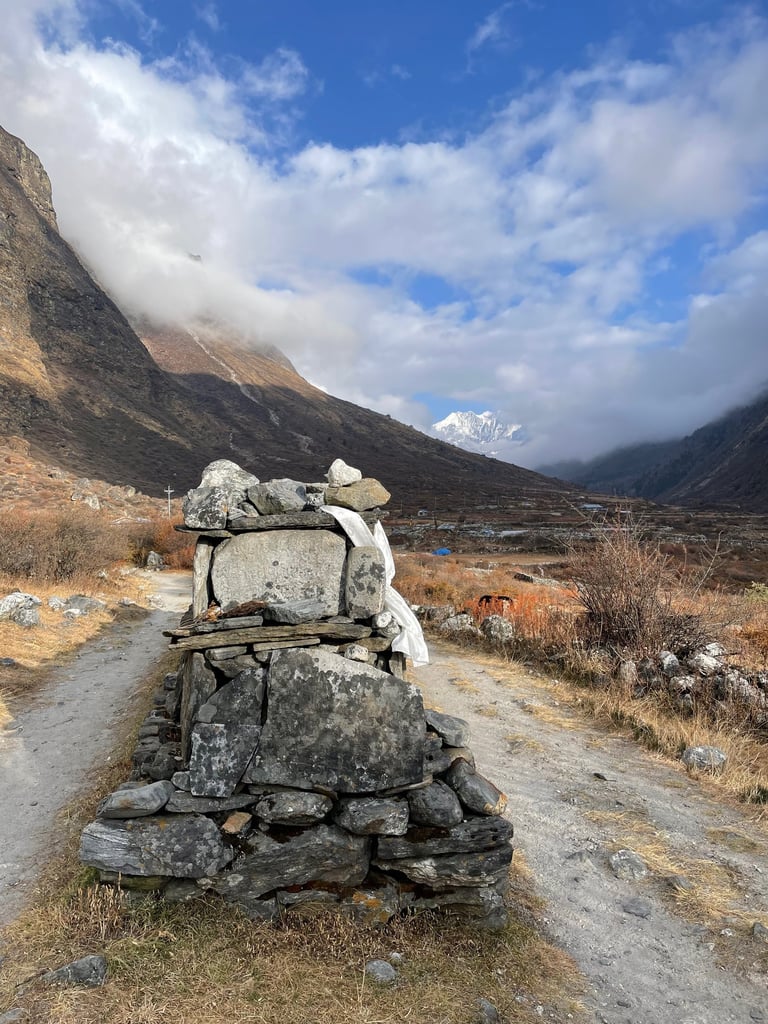
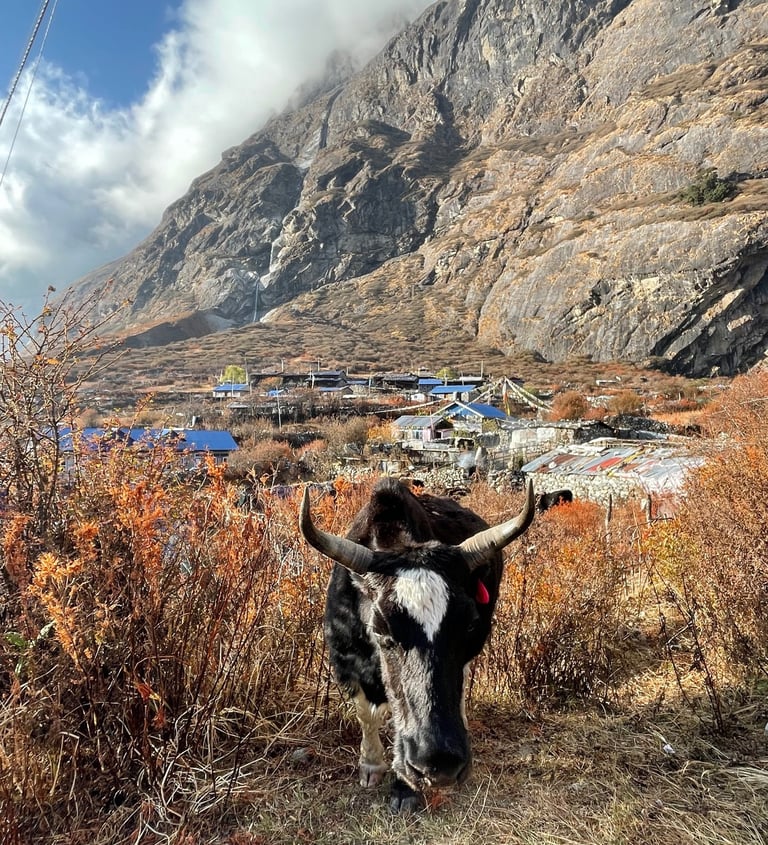
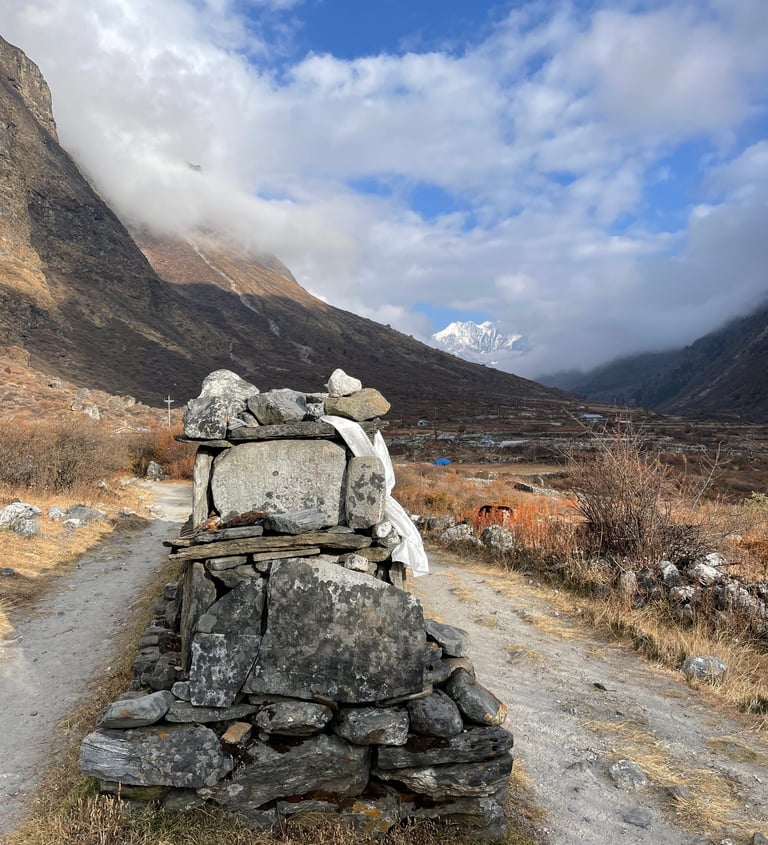
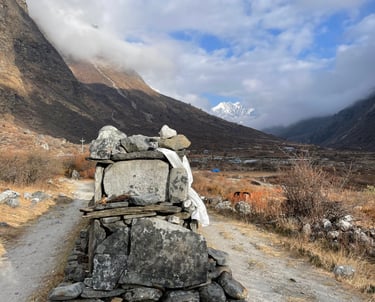
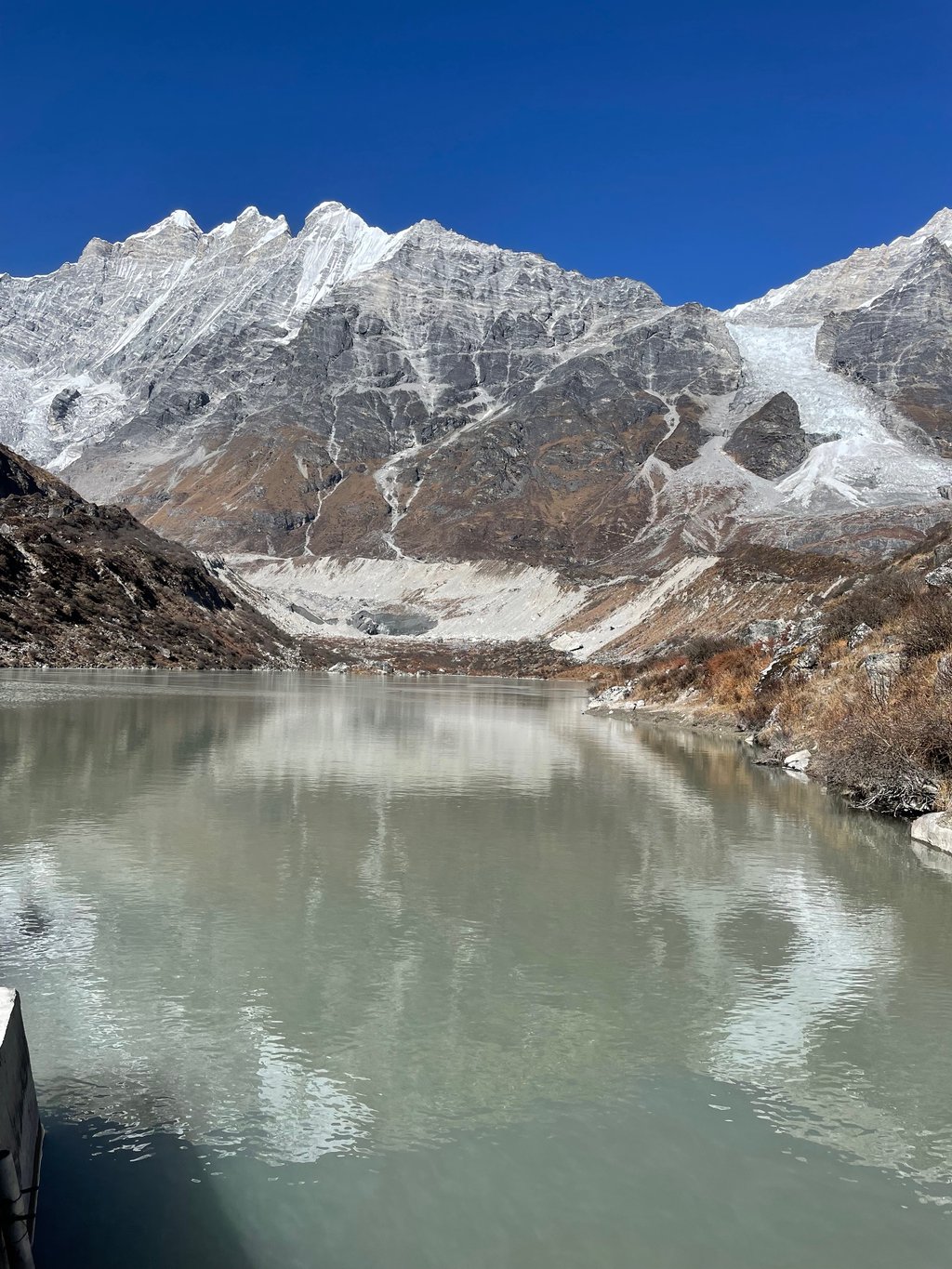
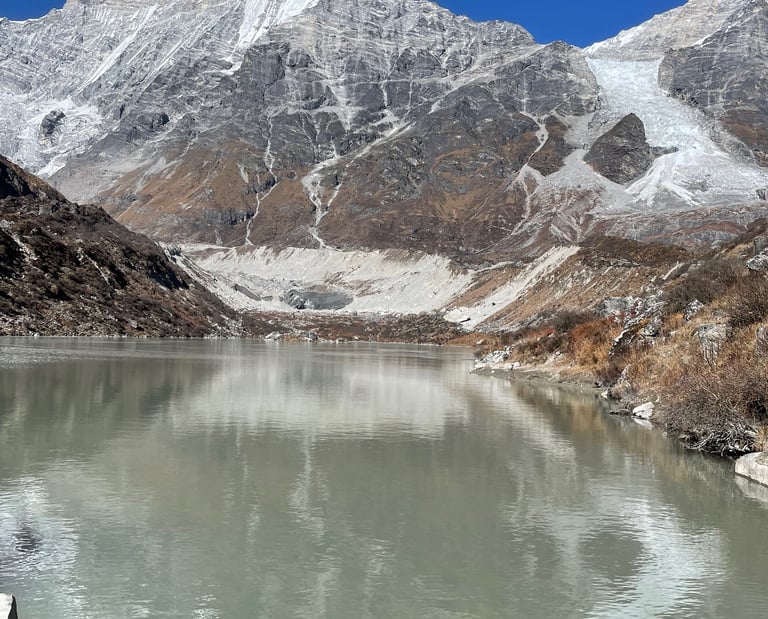
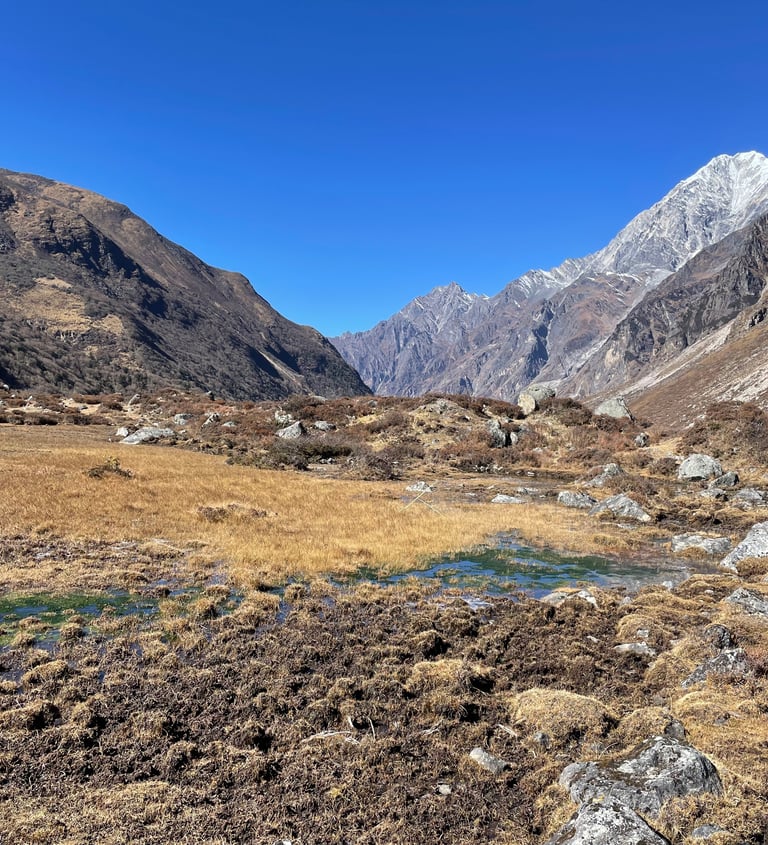
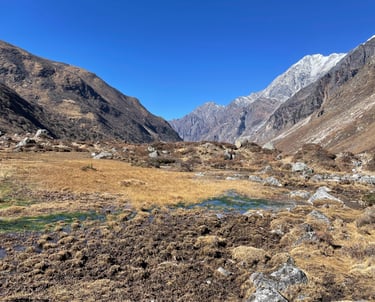
A glimpse of the landscapes, villages and people we will encounter along the way.